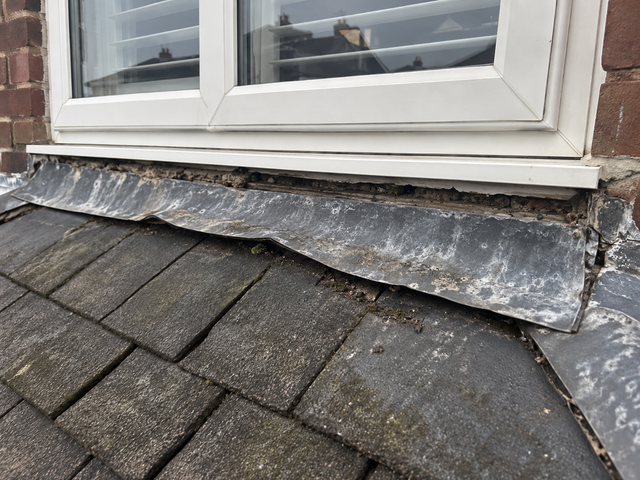
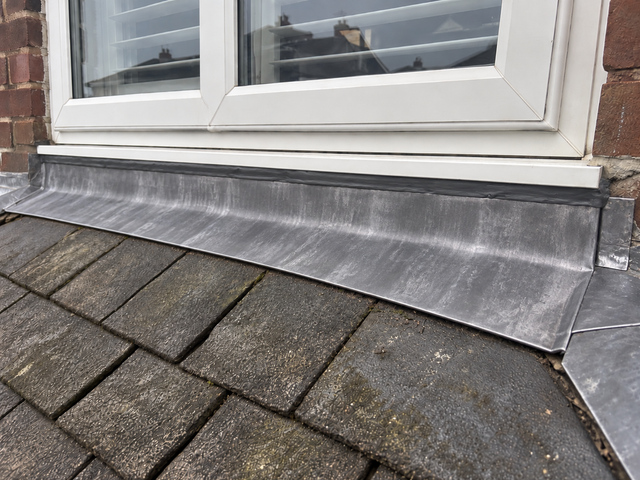
Where flashing is used
- Around chimney stacks
- Where a roof meets a wall, such as extensions, porches and bay windows
- In valleys where two roof slopes meet
- Around dormers and roof windows
Why lead is used
Lead is soft enough to be dressed tightly over tiles and into brickwork, and it lasts for decades when it is fitted correctly. It moves with heat and cold, which is why it is installed in limited lengths with overlaps so it can expand and contract.
Why flashing fails
- The mortar holding the lead into the wall cracks and falls out
- Lengths that are too long split from repeated expansion
- Lead that is too thin for the job fatigues early
- Wind lifts lead that was not clipped properly
- Theft, particularly on low roofs
Repair or replace?
If the lead itself is sound, it can often be re-dressed, re-fixed into the wall and sealed with a lead sealant. Lead that is split, thin or missing is replaced. Mastic or flashing tape smeared over a split is a temporary measure at best and tends not to last.
What a proper flashing repair includes
The old mortar is raked out of the joint, the lead is cut and shaped to fit, tucked into the joint, held with clips or wedges and pointed in. Finished lead is often treated with patination oil to prevent white staining on the tiles below.
Need this fixed?
See our Lead Flashing Repair
service, or get a free quote.