Blockages
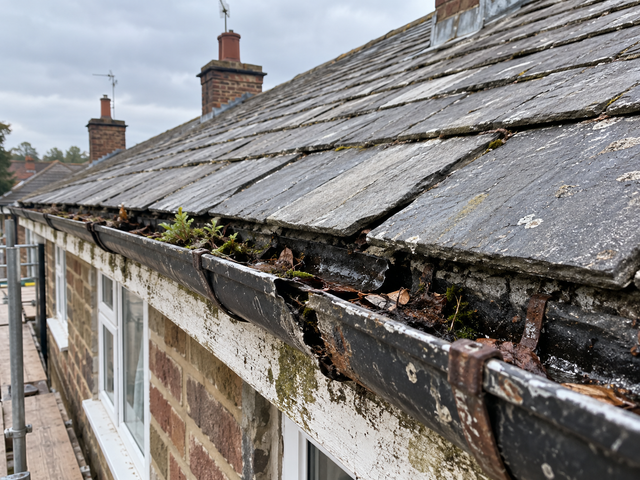
Moss, leaves and silt build up until water backs up and spills over the edge. Blocked downpipes cause the same thing. Regular clearing, usually once or twice a year depending on nearby trees, prevents most overflows.
Leaking joints
Plastic gutters are joined with rubber seals that harden and shrink with age. Drips at a union or corner usually mean the seal has failed or the gutter has pulled out of the fitting. The joint can be cleaned and resealed, or the fitting replaced.
Sagging and the wrong fall
Gutters need a slight, steady fall towards the outlet. Broken brackets, snow load or rotten fascia boards let sections sag, so water sits in the low spot and overflows there. Realigning with new brackets restores the fall.
Cast iron gutters
Older cast iron gutters rust at the joints and along the back edge. They can be resealed and repainted, or replaced with cast-effect guttering where they are beyond repair.
Damage a leaking gutter causes
- Damp patches and green staining on outside walls
- Rotten fascia and soffit boards
- Damp inside at the top of walls
- Water pooling at the base of the house
Repair or replace?
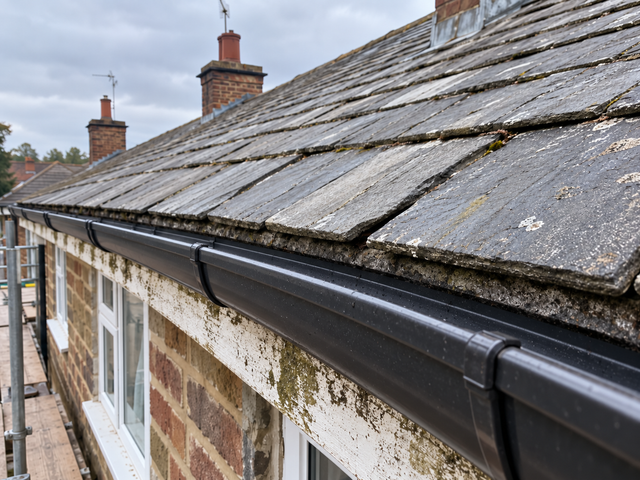
A single joint, bracket or length is a simple gutter repair. If the plastic has gone brittle, joints leak all along the run or the fascia behind is rotten, replacing the run is usually the better value.